Top 5 Tips for Maintaining Your Utah Rental Property Through Every Season
Top 5 Tips for Maintaining Your Utah Rental Property Through Every Season A Practical Guide for Residential Long-Term Rental Property […]
Top 5 Tips for Maintaining Your Utah Rental Property Through Every Season
A Practical Guide for Residential Long-Term Rental Property Owners in Utah — 2026
Utah is a state of extremes. Winters bring heavy snowfall and hard freezes along the Wasatch Front. Summers deliver intense heat, low humidity, and the occasional fierce thunderstorm. Spring and fall, while brief, bring their own demands — from snowmelt and soil expansion to cooling systems and falling leaves. For landlords managing long-term residential rentals, this four-season climate means your property is under constant stress, and a reactive maintenance approach is almost always more costly than a proactive one.
Beyond cost savings, Utah law makes property upkeep a legal obligation. Under the Utah Fit Premises Act (Utah Code § 57-22), landlords are required to maintain rental properties in a condition fit for human habitation — including functional heating, plumbing, electrical, and water systems. Failure to address maintenance issues within the required timeframe can expose landlords to rent withholding, lease termination, and legal liability. In 2026, updated provisions place an even greater emphasis on documented maintenance practices and timely responses to habitability concerns.
The good news is that a well-structured seasonal maintenance plan protects your investment, keeps tenants satisfied, and helps you stay on the right side of Utah landlord-tenant law. Here are the top five tips every Utah landlord should follow to maintain their residential rental property through every season of the year.
Tip 1: Build and Follow a Season-by-Season Maintenance Calendar
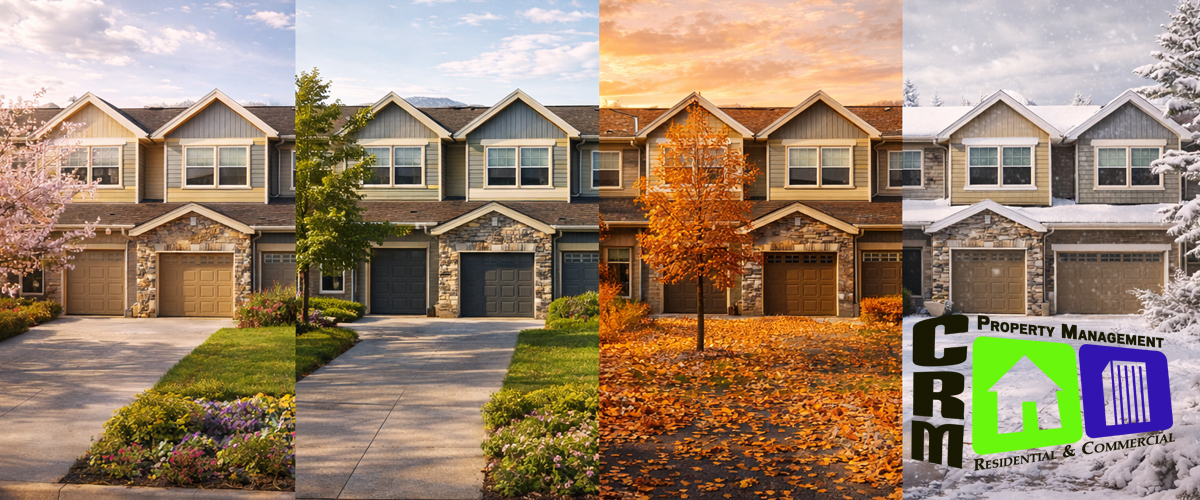
The single most effective thing a Utah landlord can do is stop thinking about maintenance reactively and start planning it seasonally. Each of Utah’s four seasons brings a distinct set of maintenance priorities and addressing them on a consistent schedule prevents small issues from becoming expensive emergencies.
Spring (March – May)
- Inspect the roof for ice dam damage, missing shingles, or compromised flashing from winter storms
- Clean gutters and downspouts of winter debris to ensure proper drainage during spring rain
- Test and service irrigation and sprinkler systems before summer heat sets in
- Re-seal windows and exterior doors where winter freeze-thaw cycles may have cracked caulking
- Schedule an A/C inspection and filter replacement before the cooling season begins
Summer (June – August)
- Check attic ventilation to prevent heat buildup that can damage roofing materials and drive-up cooling costs
- Inspect siding for sun damage, warping, or gaps that allow moisture or pests to enter
- Test smoke and carbon monoxide detectors and replace batteries as needed
- Inspect dryer vents for lint buildup, which is a leading cause of residential fires
Fall (September – November)
- Service the heating system before the first freeze — replace furnace filters, inspect the heat exchanger, and bleed radiators if applicable
- Inspect the roof and gutters again after leaves fall to prevent drainage blockages
- Shut down and winterize irrigation systems before freezing temperatures arrive
- Check weather stripping on all exterior doors and windows for gaps that increase heating costs
Winter (December – February)
- Monitor for ice dam formation on the roof after heavy snowfall and arrange prompt removal
- Ensure all exposed pipes are insulated to prevent freezing and costly water damage
- Confirm that heating systems are functioning properly — Utah law requires landlords to always maintain functional heating in rental units
- Keep pathways, driveways, and steps clear of snow and ice to reduce liability
Maintaining a written seasonal calendar — and keeping records of completed tasks — also provides documentation that is increasingly important under Utah’s updated 2026 Fit Premises Act requirements.
Tip 2: Prioritize Your HVAC System Above All Else
In Utah’s climate, your rental property’s HVAC system is arguably its most critical component. Tenants depend on it for warmth during frigid Wasatch winters and relief during triple-digit summer days. A failed furnace or air conditioner is not just a comfort issue — it is a habitability issue under Utah law, and landlords are required to address heating failures within a short timeframe after receiving written notice from a tenant.
Regular professional HVAC tune-ups — ideally twice a year, once in spring and once in fall — can extend the life of your system by five to ten years and dramatically reduce the risk of an emergency breakdown at the worst possible time. Between professional services, landlords or their property managers should change filters every one to three months, especially during peak heating and cooling seasons.
Budgeting for HVAC maintenance is also smart financial planning. Utah property management specialists recommend setting aside 1% to 4% of a property’s value annually for all maintenance and repairs. For a $450,000 single-family rental, that equates to between $4,500 and $18,000 per year — a range that underscores why proactive upkeep is far more cost-effective than emergency replacements.
Tip 3: Inspect Your Roof and Foundation Every Year
Utah’s climate puts two systems under strain: the roof and the foundation. Freeze-thaw cycles throughout the winter months cause shingles to contract and expand, weakening seals and creating entry points for moisture. Ice dams — ridges of ice that form at the roof edge — can force water beneath shingles and into the structure, causing damage that often goes undetected until it becomes a major interior repair.
A professional roof inspection at least once a year — ideally in spring after winter stress — is one of the highest-return maintenance investments a Utah landlord can make. Well-maintained roofing materials can last over 25 years; neglected roofs often require replacement in half that time.
Utah’s clay-heavy soils present a unique foundation challenge. These soils absorb moisture and expand during wet periods, then contract during dry summers — a cycle that can cause foundation settling, cracking, and structural movement over time. Walking your property’s perimeter each spring and fall to look for new cracks or signs of settling allows you to catch foundation issues before they escalate into structural repairs that can cost tens of thousands of dollars.
Tip 4: Conduct Routine Inspections and Document Everything
Routine inspections are one of the most powerful tools available to residential landlords. They allow you to identify maintenance issues early, verify that tenants are caring for the property in accordance with their lease, and maintain a documented record of the property’s condition throughout the tenancy.
Under Utah law, landlords must provide at least 24 hours’ notice before entering a rental property for a non-emergency inspection. The best practice is to schedule a formal inspection at the beginning of each lease, at mid-lease, and at move-out. Each inspection should include written notes and photographs documenting the property’s condition.
Documentation is especially important in 2026, as Utah’s updated Fit Premises Act places a higher burden on landlords to provide written inventories of property condition before tenants move in and to maintain clear records of maintenance requests and responses. This paper trail protects you in the event of a security deposit dispute or habitability complaint and demonstrates the professional standard of care that long-term tenants increasingly expect.
Tenants who know their landlord inspects regularly and responds promptly to maintenance concerns are also significantly more likely to stay — and tenant retention is one of the most effective ways to protect your rental income in any market.
Tip 5: Build Relationships with Trusted Local Vendors Before You Need Them
One of the most common — and costly — mistakes Utah landlords make is scrambling to find a contractor in the middle of a maintenance emergency. A burst pipe in January, a failed furnace in December, or a roof leak during spring snowmelt all require immediate response. Without an established vendor network, emergency service rates are higher, response times are longer, and the quality of work can be inconsistent.
Building relationships with vetted local vendors before you need them gives you a significant advantage. Identify and pre-qualify reliable professionals in each of the following trades:
- HVAC technicians — for seasonal tune-ups and emergency heating or cooling failures
- Plumbers — for pipe repairs, water heater issues, and winterization
- Roofers — for post-winter inspections and storm damage repairs
- General handymen — for routine repairs, seasonal tasks, and turnover preparation
- Electricians — for safety inspections and code compliance work
Established vendor relationships often come with priority scheduling, consistent pricing, and a familiarity with your specific properties that translate into faster, better work. Many experienced Utah property managers maintain a preferred vendor list as a core component of their management operations — and independent landlords should do the same.
Protecting Your Investment Year-Round
Utah’s four-season climate is one of the things that makes the state such a compelling place to live — and it is also one of the reasons that proactive property maintenance is so essential for landlords. A seasonal maintenance plan does not just protect the physical structure of your rental property; it protects your relationship with your tenants, your compliance with Utah law, and the long-term value of your investment.
In 2026’s more balanced rental market, where tenants have slightly more options and expect a higher standard of professional management, landlords who invest in their properties consistently will stand out. Well-maintained homes attract better tenants, experience lower vacancies, and command competitive rents — season after season, year after year.
Whether you manage one property or a growing portfolio across the Wasatch Front, the principles remain the same: plan ahead, act consistently, document thoroughly, and never wait for a small problem to become a large one.
Need help managing seasonal maintenance for your Utah rental properties? Our experienced property management team is here to help you protect your investment and keep your tenants happy — year-round.
Contact CRM Property Management Company today to learn more from the link below. Let us help to enhance and protect the value of your property. Thank you. You will be glad you did.